
Solar Gadgets Barely Move a New York Electricity Bill
How CodoraTech is funded: CodoraTech is supported by advertising and, in some articles, by affiliate links. Where an article contains affiliate links, we say so at the top of that article.
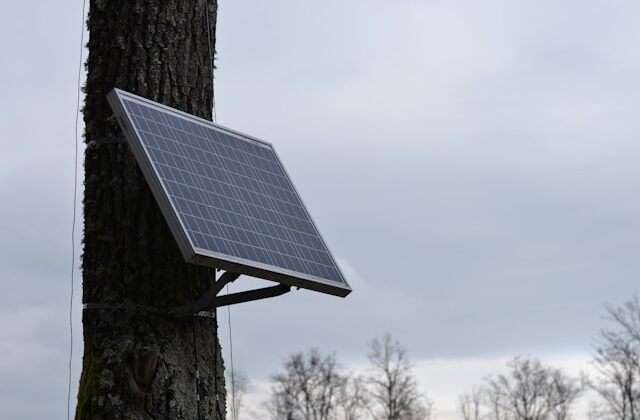
A 100 watt folding panel is the usual entry point to urban solar, and in Brooklyn a perfectly sited one produces about 146 kilowatt hours a year. That is 1.4 percent of what the average American household consumed in 2022, and about 41 dollars of New York electricity at current rates. The panel itself lists at $199.99. Small solar hardware is genuinely useful for balconies, camping and power cuts, but the arithmetic does not support the idea that it lowers a city energy bill by an amount anyone would notice.
The numbers this article runs on
- Brooklyn solar resource: 1,459.7 kWh per kWp per year, modelled by the Global Solar Atlas through 2025.
- Average US residential customer: 10,791 kWh in 2022, per the EIA.
- New York residential electricity: 28.37 cents per kWh in January 2026, per the Empire Center using EIA data.
- Community solar discount: 5 to 10 percent off annual electricity costs, per NYSERDA.
- Average New York rooftop system: 12.29 kW, $33,951 gross, 12.86 year payback, per EnergySage.
One hundred watts, 146 kilowatt hours, 41 dollars
The Global Solar Atlas, run by the World Bank and ESMAP using Solargis data, models Brooklyn at 40.67 north, 73.98 west with a specific photovoltaic output of 1,459.7 kilowatt hours per kilowatt-peak per year, and an optimal tilt of 35 degrees. A 100 watt panel is 0.1 kilowatt-peak. Multiply through and an unshaded, optimally tilted 100 watt panel in Brooklyn yields roughly 146 kilowatt hours a year.
The US Energy Information Administration puts the average residential utility customer at 10,791 kilowatt hours in 2022, about 899 kilowatt hours a month. The panel therefore covers about 1.4 percent of that household’s consumption. Priced at the Empire Center’s figure of 28.37 cents per kilowatt hour for New York residential electricity in January 2026, 62 percent above the national average, 146 kilowatt hours is worth about 41 dollars a year, and only if every one of those kilowatt hours is actually used.
Against a representative product, a 100 watt bifacial Anker SOLIX PS100 listed at $199.99, that is a payback of roughly five years in the best case. A folding panel propped on a balcony or a fire escape will not achieve 35 degrees of tilt or an unobstructed horizon, so real output will be materially lower. Two caveats on the inputs: the consumption figure is 2022 data, and the Empire Center notes that the EIA price is revenue divided by sales volume rather than a posted retail rate.
A solar phone charger saves about 1.96 dollars a year
An iPhone 13 Pro battery holds 3,095 milliamp hours at 3.83 volts, or 11.85 watt hours. Charging it fully every day for a year draws about 6.9 kilowatt hours, arithmetic set out by How-To Geek in a consumer explainer that carries no byline or date. At New York’s 28.37 cents per kilowatt hour, a solar charger that displaced all of that grid electricity would save about 1.96 dollars a year.
For scale, 6.9 kilowatt hours is roughly 0.06 percent of the average household’s 10,791 kilowatt hours. The EIA’s 2015 Residential Energy Consumption Survey put televisions and related electronics together at 7 percent of household electricity and lighting at 10 percent, and phone charging is a small fraction of that 7 percent. A solar charger is worth buying for off-grid convenience and for keeping a phone alive in an outage. Those are real reasons. Reducing a household electricity bill is not one of them.
What a Park Slope co-op actually installed
There is a documented Brooklyn example of building-scale solar. Habitat Magazine, an independent trade title covering New York co-ops and condos, reported on 22 September 2011 that 176 Sterling Place in Park Slope, a 12-unit building from 1906 that became a co-op in 1985, had installed a rooftop solar thermal system with photovoltaics, proposed by board treasurer Robert Dascoli, after water bills rose 15 percent a year as of 2007.
The published figures are modest and specific. The system could offset up to 50 percent of the building’s water-heating energy, which works out at roughly 15 percent of total building energy because water heating is about 30 percent of the load. The cost was not published. Fifteen percent of a building’s energy from fixed equipment on a roof the residents collectively control is a different order of result from 1.4 percent from a panel on a windowsill.
The other Park Slope experiment is smaller than its reputation. The Brooklyn Microgrid, run by LO3 Energy with Siemens, launched a proof of concept in April 2016 across Park Slope, Gowanus and Boerum Hill, letting neighbours trade rooftop solar electricity peer to peer. Microgrid Knowledge described the initial trial as about half a dozen rooftop arrays on one side of a street and a similar number on the other. That is roughly a dozen households: a demonstration, not a neighbourhood energy system. Its current status is unclear, since the project’s own site still describes the scheme as a proposal, with no dates and no participant numbers.
Community solar and the 5 to 10 percent ceiling
For anyone without a roof they control, the option with documented savings is community solar, and New York is the largest market for it in the country. NYSERDA reported in December 2023 that the state had more than 2 gigawatts of community solar across over 800 projects, close to a third of the entire 6.2 gigawatt US community solar market. The agency states that subscribers typically receive a discount of 5 to 10 percent off their annual electricity consumption costs, pay little to no upfront costs and receive monthly bill credits, and it runs an income-qualified programme, Statewide Solar for All.
Five to 10 percent is the honest ceiling for a renter, and it is worth several times what a well-sited portable panel returns, with no hardware to buy or maintain.
Group buying is the other real mechanism, and it applies to installed rooftop systems rather than devices. Solar United Neighbors, a nonprofit, describes co-ops in which 20 to 30 members trigger competitive bidding, typically running 30 to 100 members over three to nine months, and says it has helped thousands of people go solar in hundreds of co-ops. It publishes no discount percentage, and neither does NYSERDA for the solarize campaigns it previously supported, which it describes as group buying of rooftop installations.
The ladder of what actually reaches a bill
The top of the ladder is where New York’s progress has actually come from. Habitat Magazine, reporting NYSERDA figures on 29 October 2024, recorded the state passing 6 gigawatts of installed distributed solar ahead of schedule. Within that, Solar One’s Here Comes Solar programme facilitated 900 projects at New York City buildings totalling 32 megawatts, roughly 36 kilowatts per building, and Solar One is explicit that it covers roof-mounted systems rather than portable or small-scale devices. Six gigawatts was not built out of 100 watt panels.
Ranked by the size of the effect on an urban electricity bill, the options fall into a clear order, and the cheapest hardware sits at the bottom of it:
- Rooftop photovoltaics. EnergySage, a commercial solar quote marketplace with an interest in adoption, reports an average New York system of 12.29 kilowatts at $2.76 per watt, an average gross cost of $33,951, a payback period of 12.86 years and 25-year savings of $50,120, drawn from recent quotes on its own marketplace. It needs a roof you control and tens of thousands of dollars.
- Community solar. A 5 to 10 percent discount on annual electricity costs per NYSERDA, no roof required, little to no money up front.
- A portable panel, well sited. Around 1.4 percent of an average household’s consumption at best, and lower in practice once tilt and shading are realistic.
- Solar chargers, lanterns and similar devices. Effectively nothing on a bill. Buy them for outages and portability.
Sources: NYSERDA · Habitat Magazine · US Energy Information Administration · Global Solar Atlas · EnergySage