
insights into the efficacy of lidar compared to cameras in self-driving cars
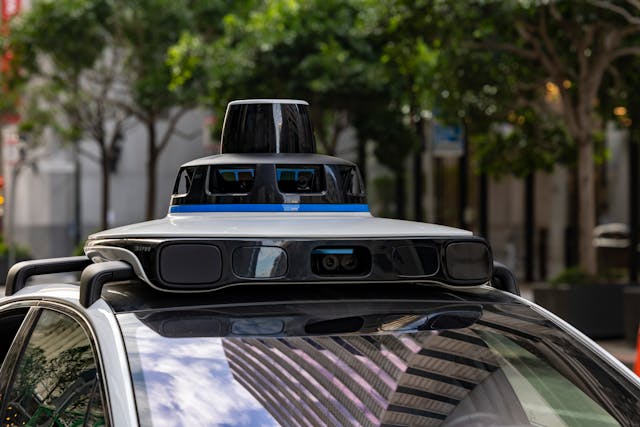
The Rise of Autonomous Vehicles: A Technological Revolution
Autonomous vehicles, often hailed as the future of transportation, rely heavily on a combination of sensors to perceive their environment. Two primary technologies have emerged as contenders for enabling these vehicles to 'see' the world: Lidar and camera-based systems. As these technologies continue to evolve, understanding their respective strengths and weaknesses is crucial for stakeholders involved in developing and deploying self-driving cars.
Understanding Lidar and Camera Systems
Lidar Technology
Lidar, short for Light Detection and Ranging, uses laser beams to measure distances to objects. By emitting laser pulses and measuring the time it takes for the reflection to return, Lidar systems can create precise, three-dimensional maps of their surroundings. This technology provides high-resolution data and operates well in various lighting conditions, making it a favored choice for many autonomous vehicle developers.
Camera-Based Systems
Camera systems use digital imaging technologies similar to those in consumer electronics, capturing visual information across different wavelengths. These systems interpret visual data using sophisticated algorithms, often employing artificial intelligence to recognize objects, read traffic signs, and understand lane markings. Cameras are essential for contextual information but can face challenges under varying lighting conditions.
Comparing Efficacy in Driving Conditions
Performance in Adverse Weather
One significant advantage of Lidar is its performance in poor weather conditions. Rain, fog, and snow can obscure a camera's view, but Lidar's laser pulses can penetrate through these elements with less distortion. However, heavy precipitation can still affect Lidar data accuracy, although not as severely as cameras.
Daylight and Nighttime Operations
Cameras offer an advantage in daylight by providing rich color information that helps in recognizing signs and signals more accurately. At night, cameras struggle due to poor lighting conditions unless augmented with infrared capabilities or additional lighting solutions. Lidar does not rely on ambient light, offering consistent performance regardless of the time of day.
Strengths and Weaknesses
Lidar Pros and Cons
- Pros: High precision in distance measurement, effective in low-light scenarios, robust 3D mapping capabilities.
- Cons: High cost, potential interference from other Lidars, limitations in object recognition without additional sensors.
Camera Pros and Cons
- Pros: Cost-effective, rich contextual data, superior in recognizing signage and lane markings during clear conditions.
- Cons: Performance degradation in adverse weather and low-light conditions, requires complex algorithms for data interpretation.
Integrating Lidar and Cameras: A Hybrid Approach
The debate between Lidar versus cameras need not be a zero-sum game. Many companies are exploring hybrid systems that leverage the strengths of both technologies. Such integrations allow for redundancy and cross-verification, enhancing the overall safety and reliability of autonomous navigation systems.
Case Studies: Industry Applications
Tesla's camera-centric approach has gained attention due to its reliance on advanced neural networks to interpret camera data. In contrast, Waymo incorporates a combination of Lidar and camera sensors to build comprehensive environmental models. Each company’s approach reflects their specific priorities and technological beliefs.
Practical Tips for Stakeholders
For stakeholders evaluating sensor technologies for autonomous vehicles, it is essential to consider factors like cost constraints, intended deployment environments, and regulatory requirements. Conducting pilot programs with various sensor configurations can provide valuable insights into which combination best suits a given application.
The Road Ahead
The future of self-driving technology will likely see further advancements in both Lidar and camera systems. As costs decrease and technologies improve, these systems will become more integrated and refined. The choice between Lidar and cameras—or indeed their integration—will continue to shape the landscape of autonomous vehicle development.